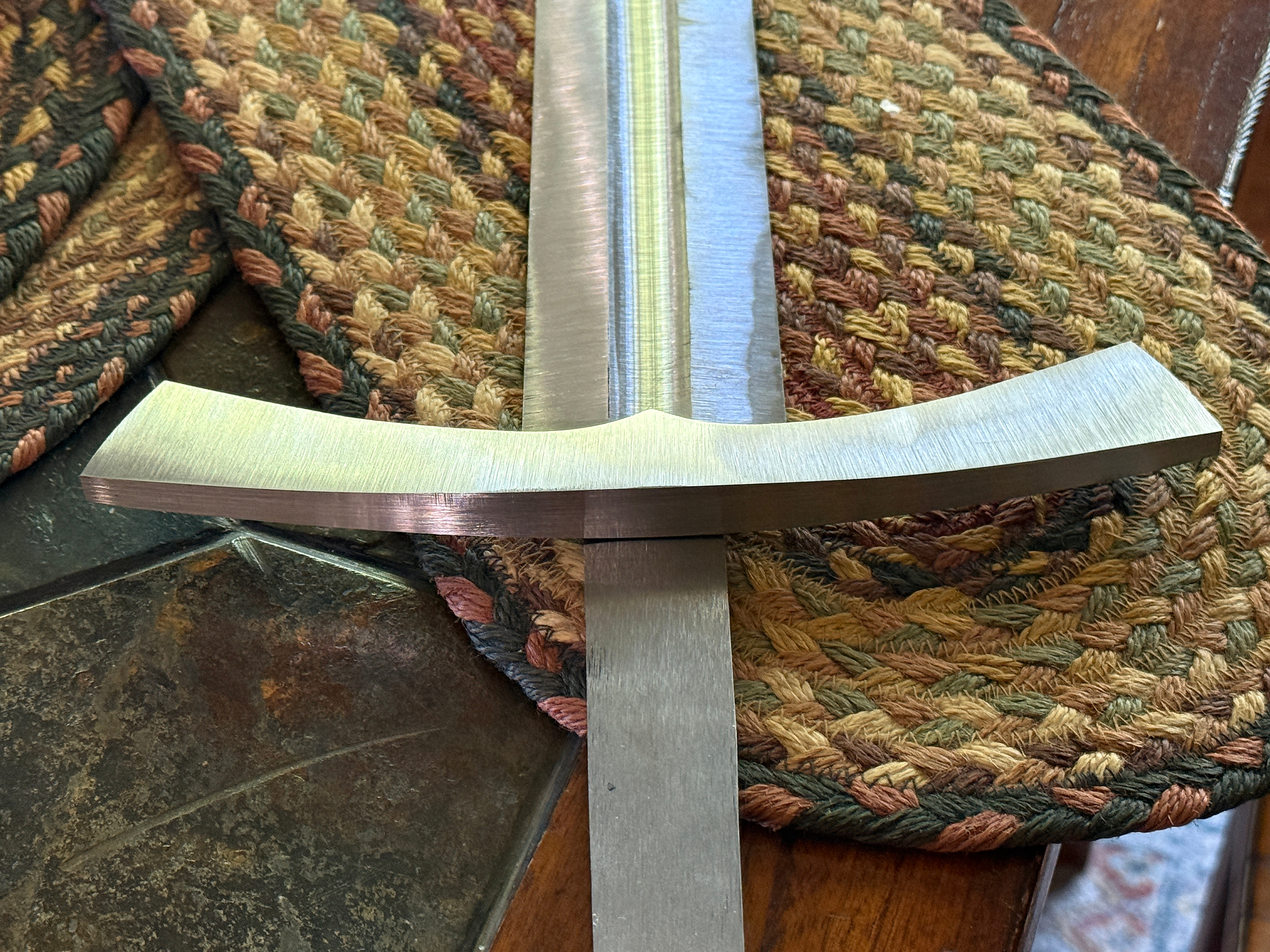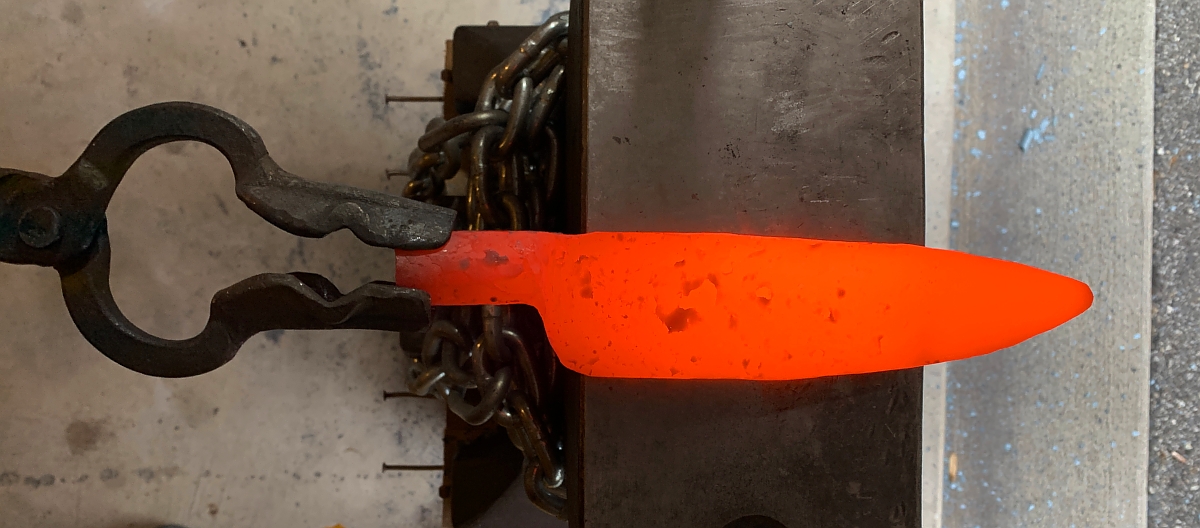
I didnt really capture many stills of the forging process because initially I was really just screwing around with a bar of W2, and had no plan to forge a sword. Initially I was just hammering in a point and thought I’d turn it into a big, honkin bowie knife. After my initial session I just looked at the bar, which was not quite wide enough to forge a sword and decided to practice hammering bevels which would make it more than wide enough, and I was off to the races
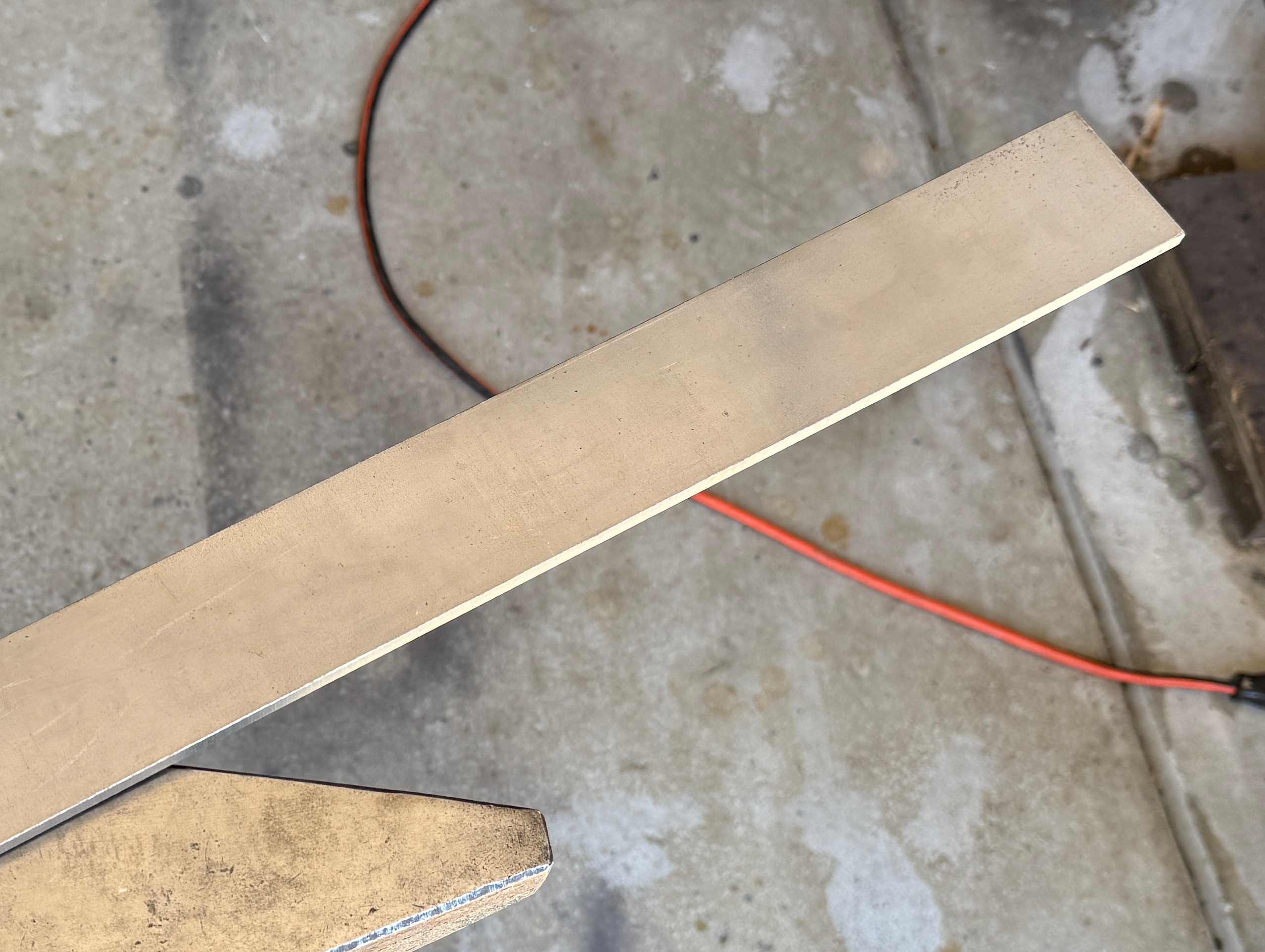
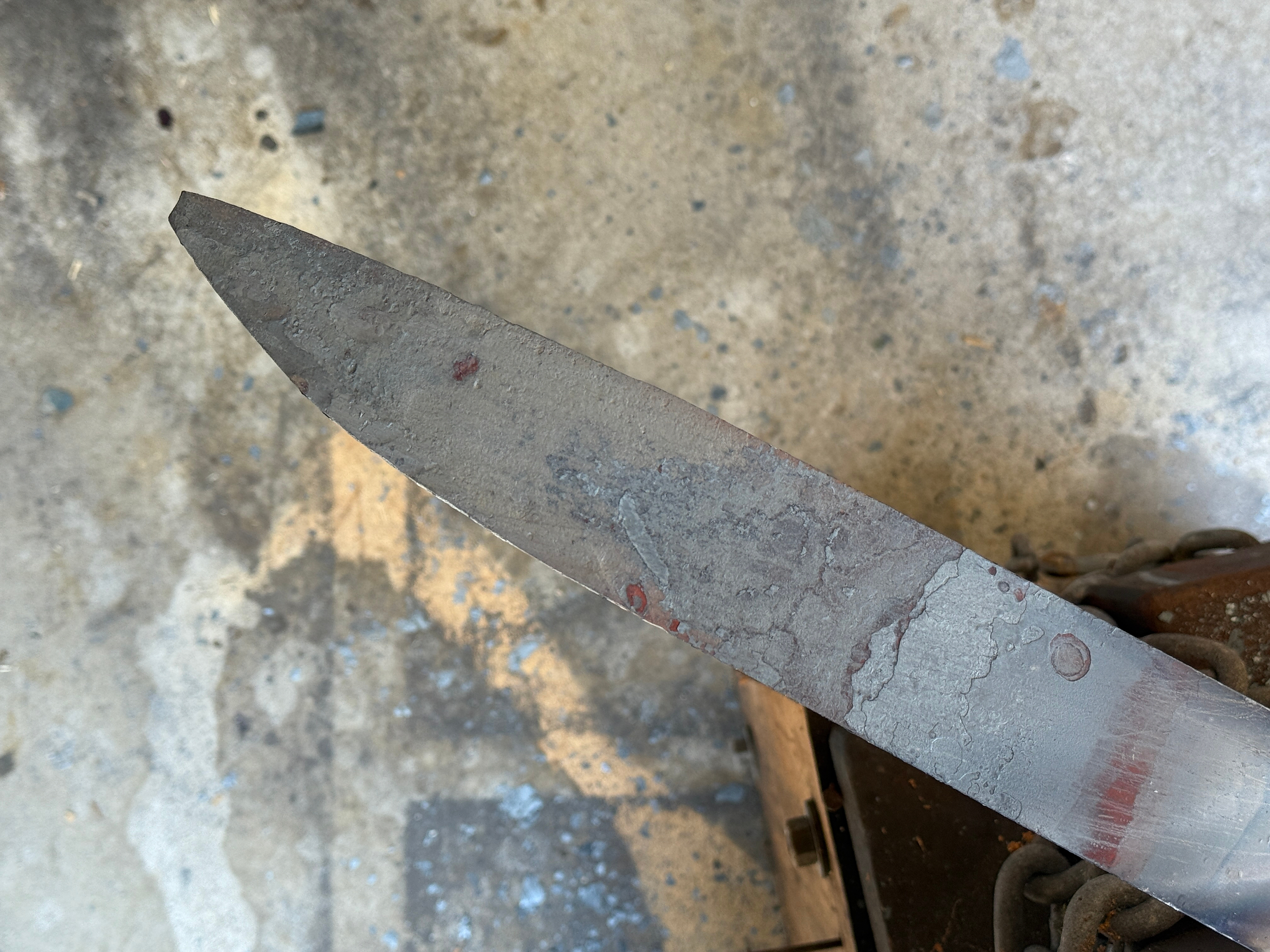
I did actually capture some video and put it on youtube, so you can see how it got from the bar show above to the hammer out blade below. Even at 14x real speed its a 12 minute vid, but you can double that if you like and make it 28x speed by changing the youtube playback speed to 2x 🙂
Heres what came out of that high-speed hammering
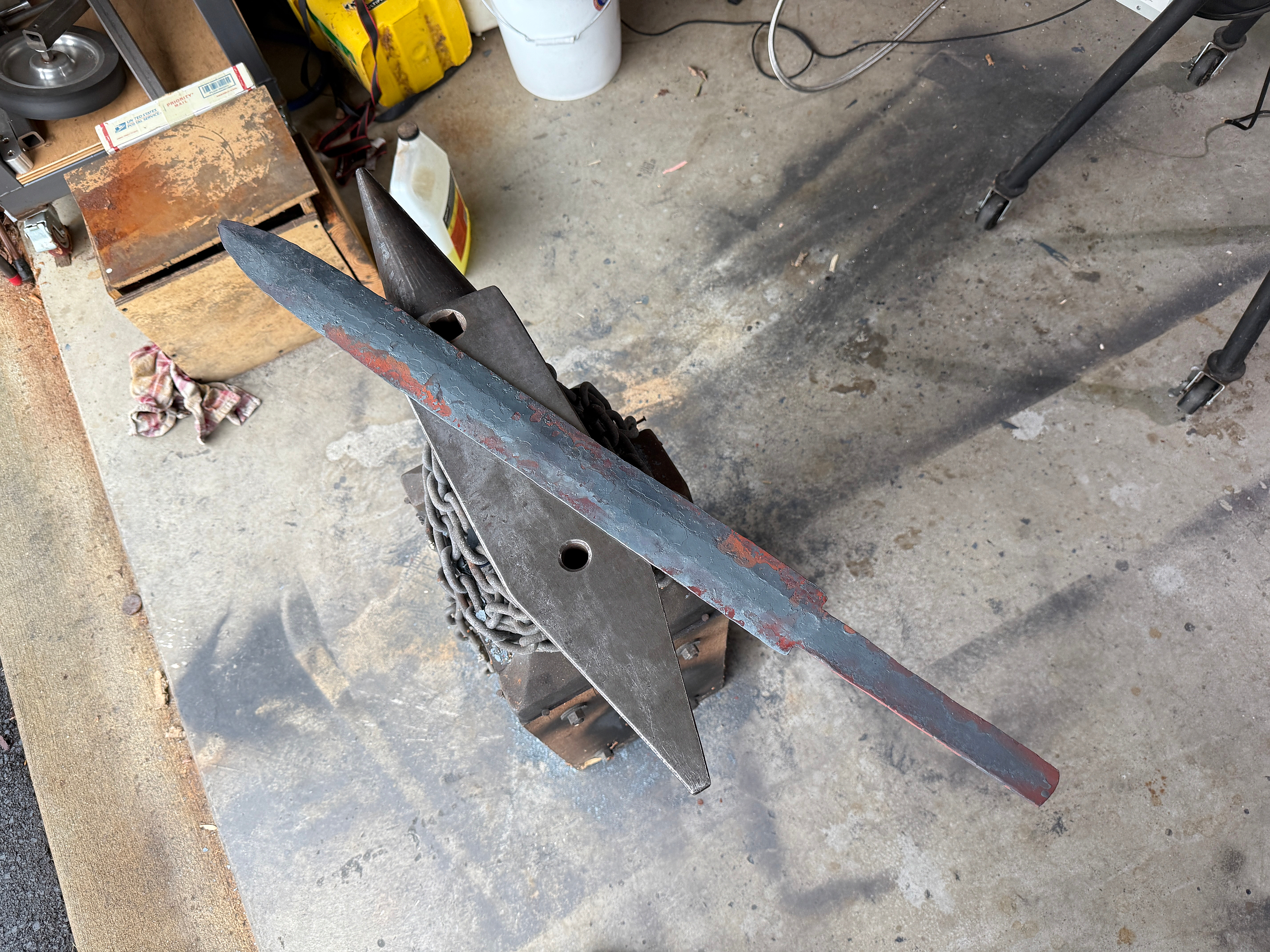
mark the center line and then find the edges from there so that the blade is equally wide both sides of the centerline
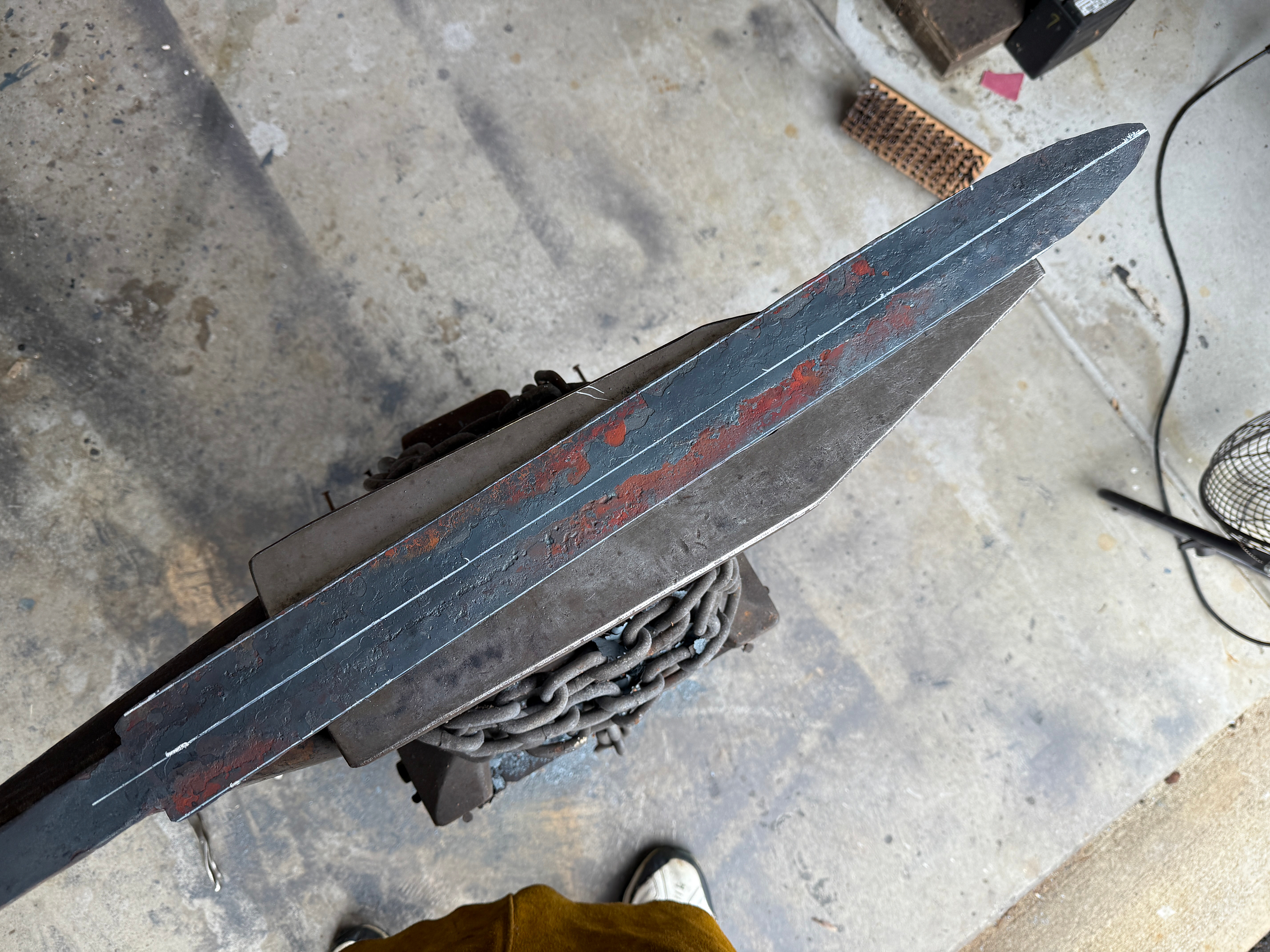
Ground off the edges to the line
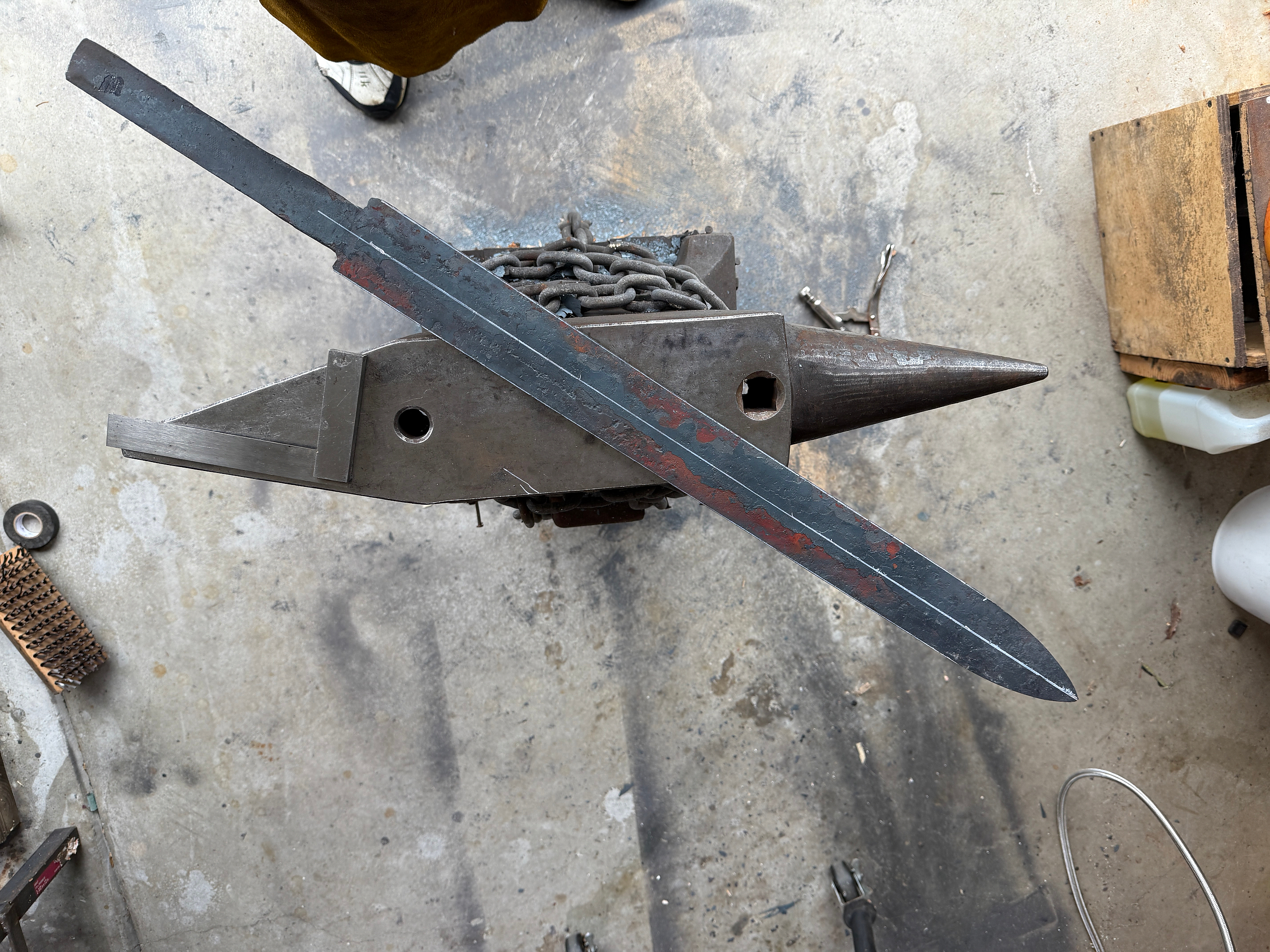
Next ground the scale off the bevels…
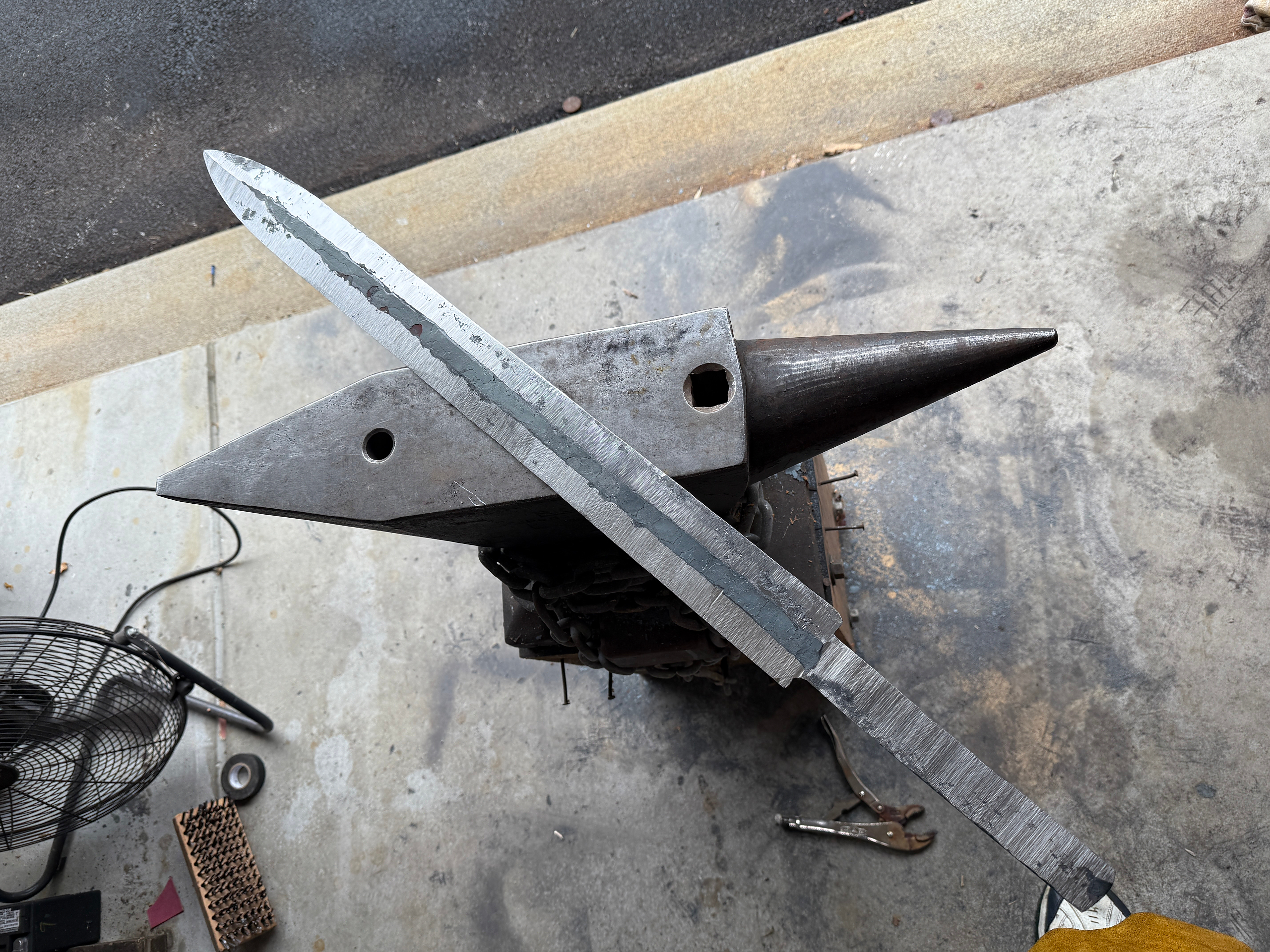
roughed in the fuller with a small wheel on my grinder
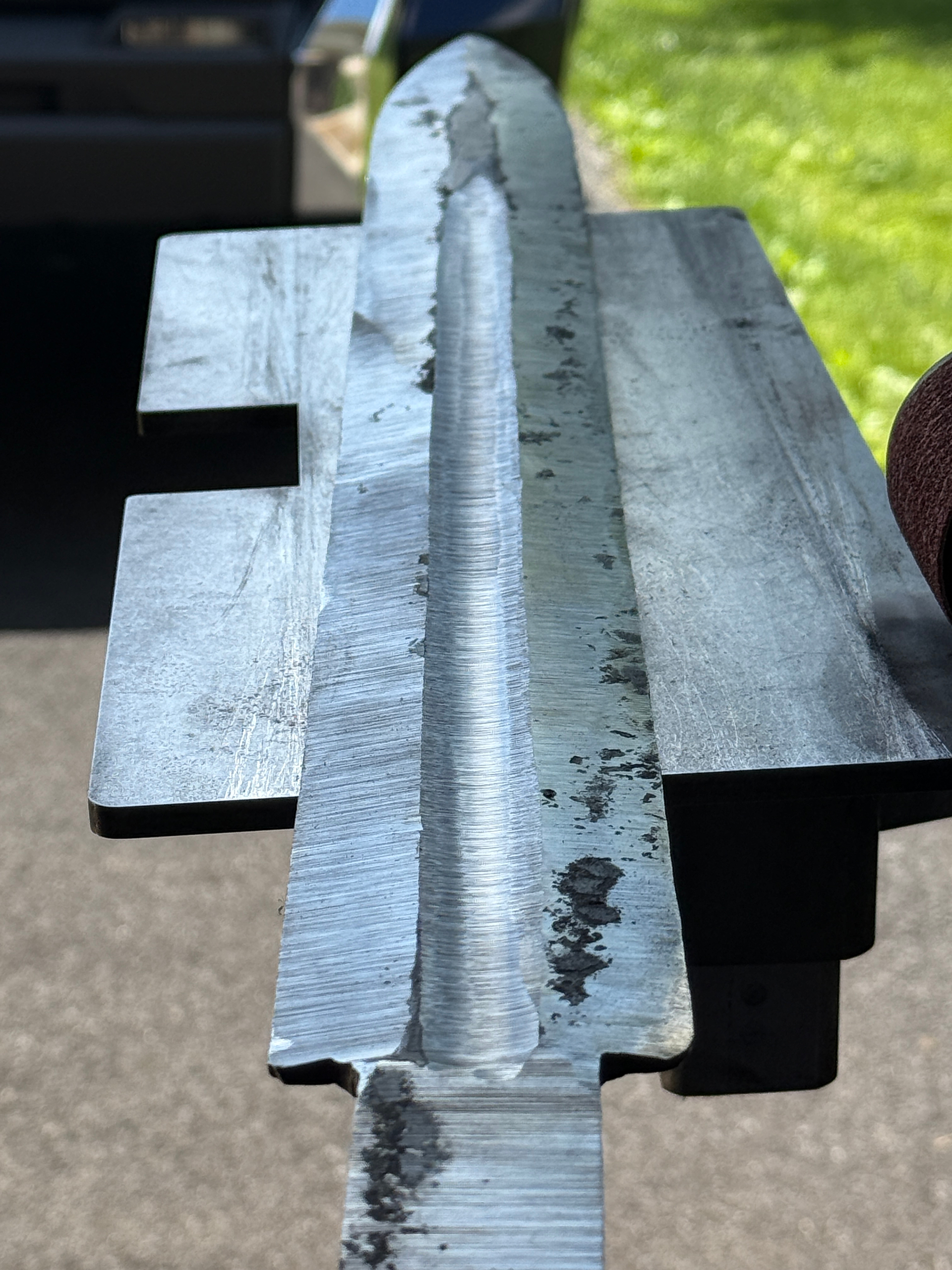
Refined the grind
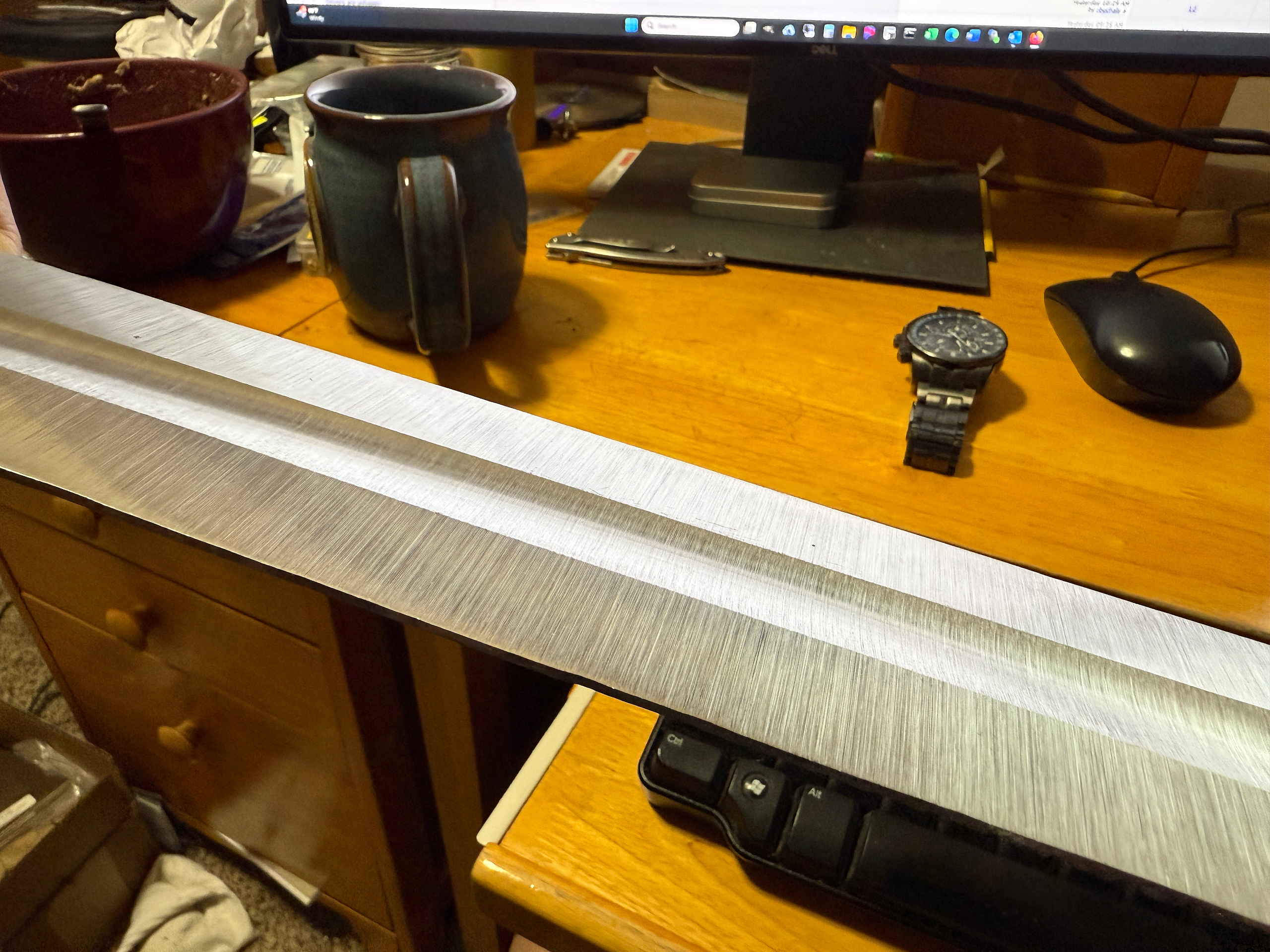
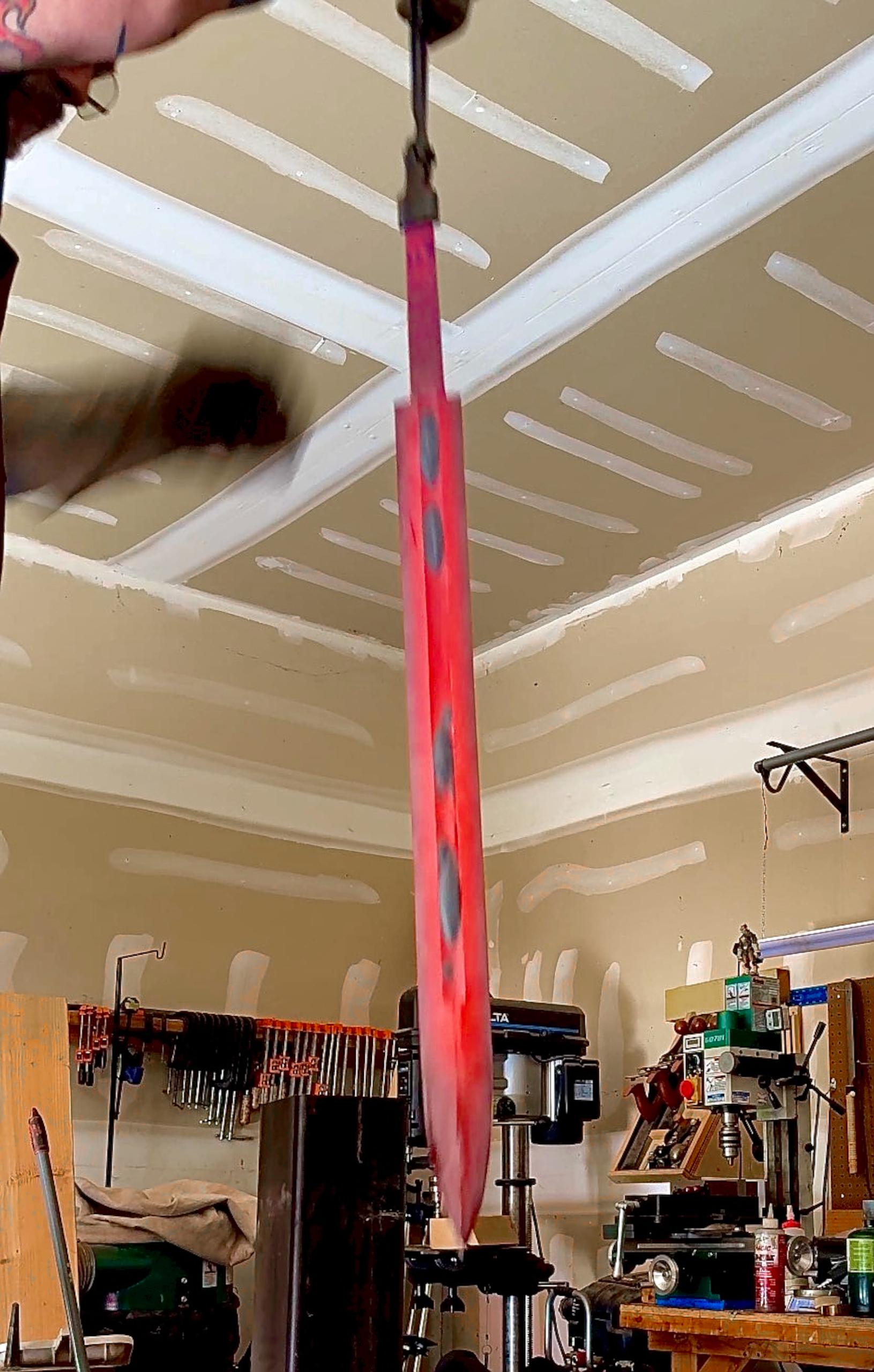
Quench the
Once cooled its covered in a dark gray later of decarb
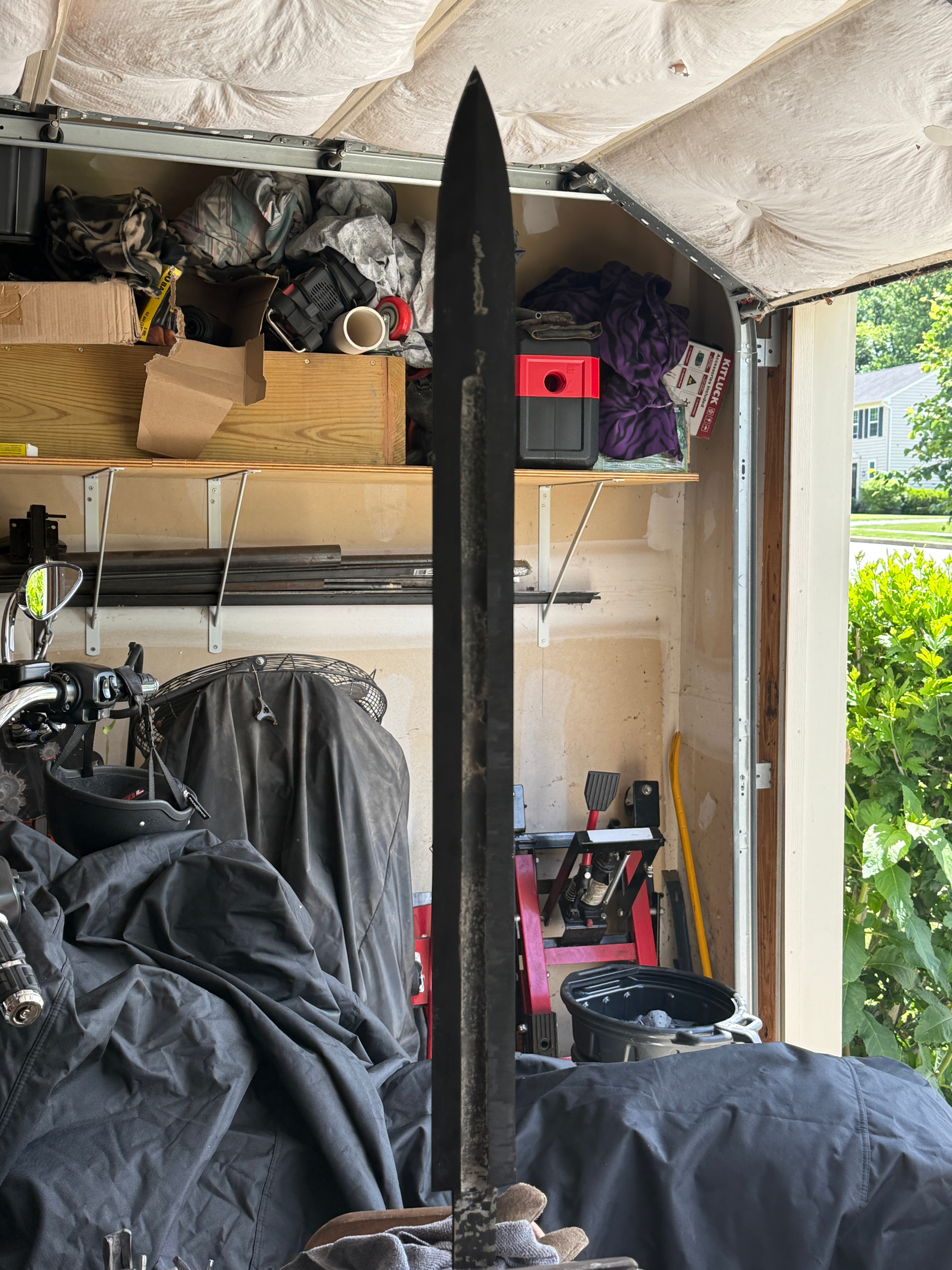
Ground the decarb off at the tip section to test how hard it got. It totally rejected the 65HRC file so yeah, it got super hard. I tested a section down just above the tang and got the same result.
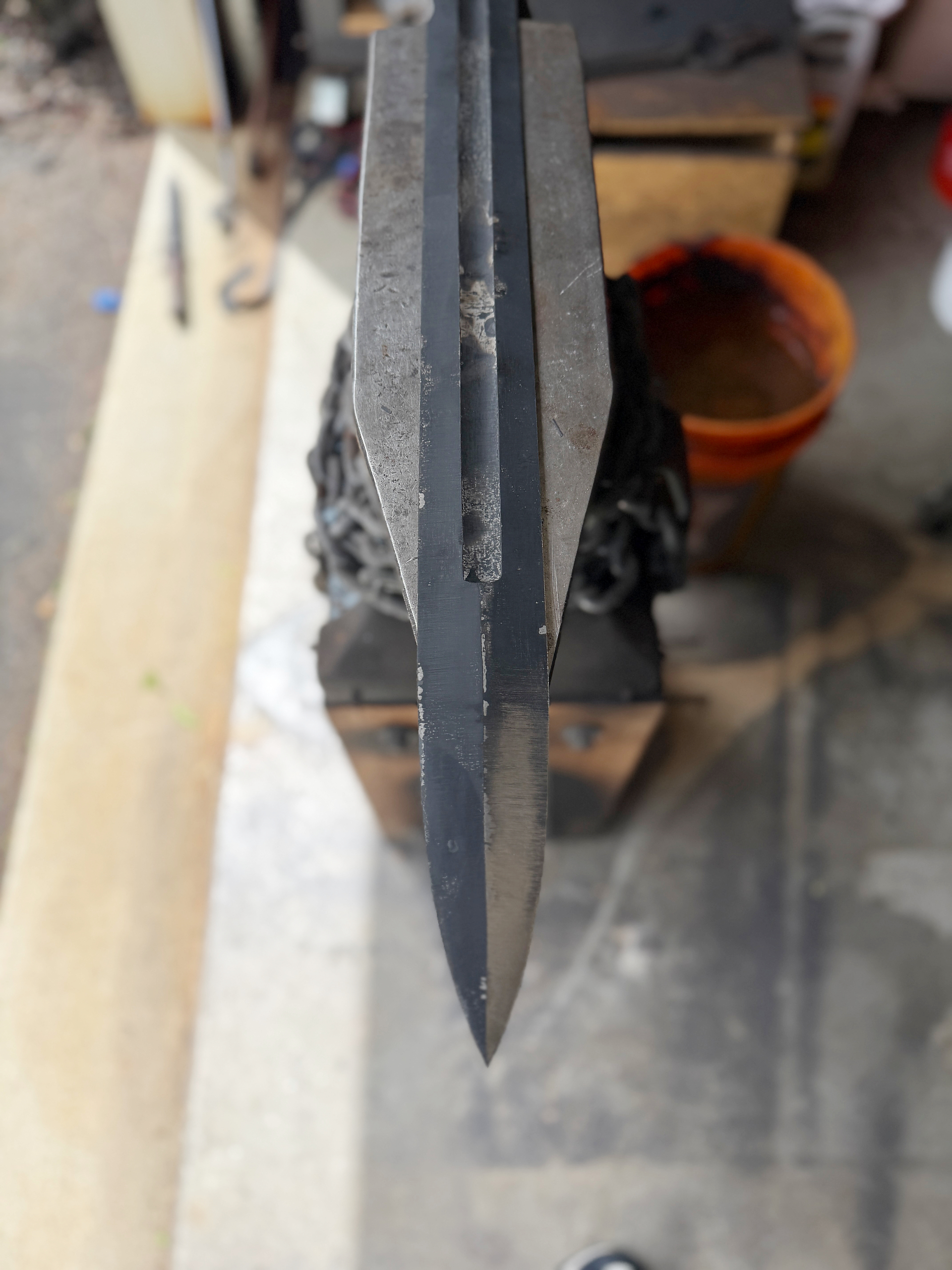
It did have a slight warp near the tip, but not super bad and I was able to straighten it in tempering. Of course 65+ HRC is ridonkulously hard and brittle so I did 3 tempering cycles of 2 hours each at 400 F. to Straighten the warp I basically forced the blade to warp to the other direction as much as it was warped to the one side, and clamped it that way in a jig just made from a piece of angle iron and a C clamp and tempered it that way. After the cycle was over and the piece had cooled to room temp I removed the clamp and the blade was now straight. I did this on the second tempering cycle because if Id tried to force the bend into the other direction when it was still 65HRC it would simply have snapped the end of the sword off like a cracker. No bueno.
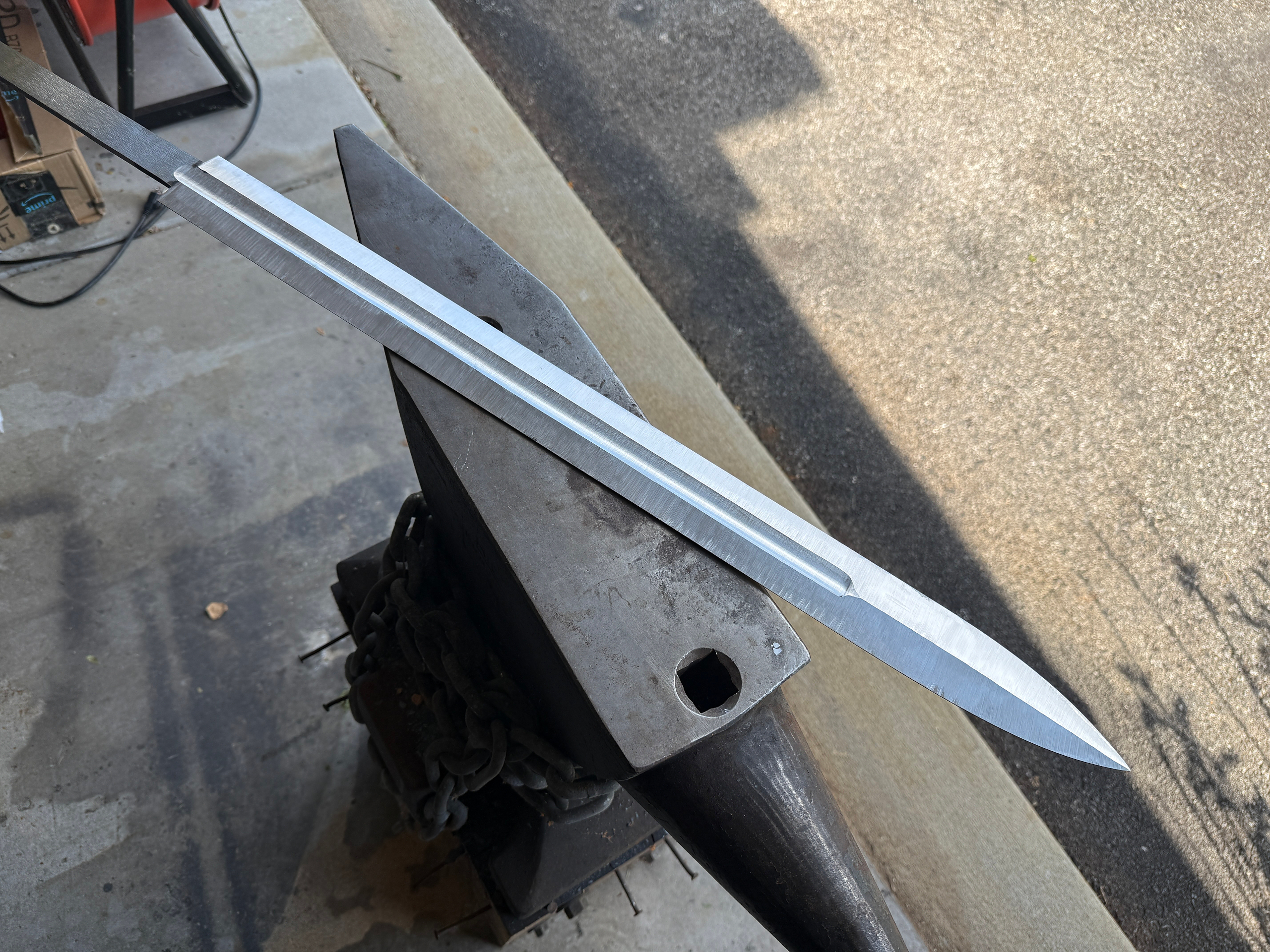
After tempering I would up in the neighborhood of 57 HRC which is idea for a sword like this. Blade is ductle enough to take hard hits without bending or snapping, but hard enough to have good edge retention. Its not as hard as a kitchen knife, but thats by design.
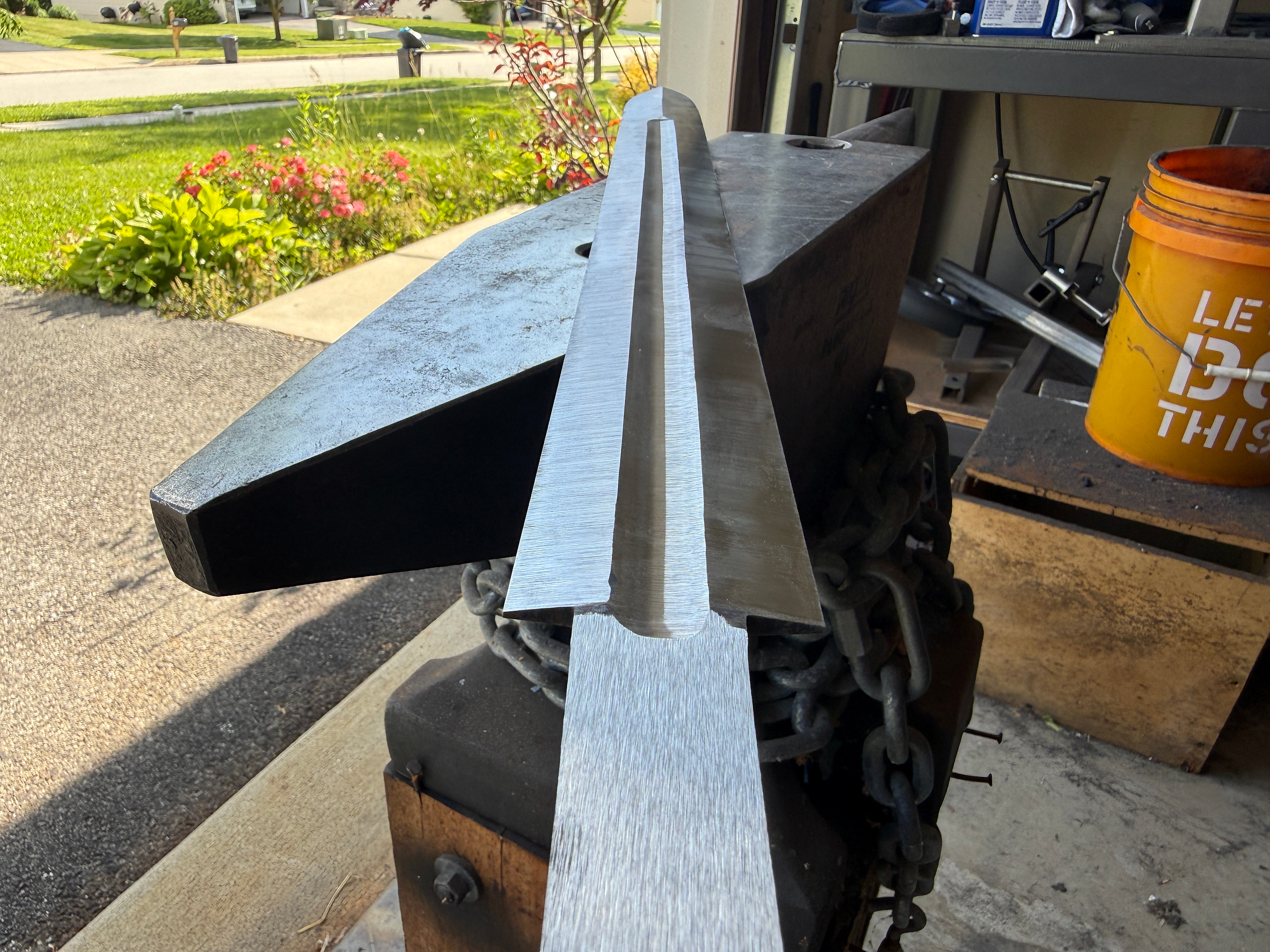
After that I finished rough grinding and bringing the blade down to near final dimensions.
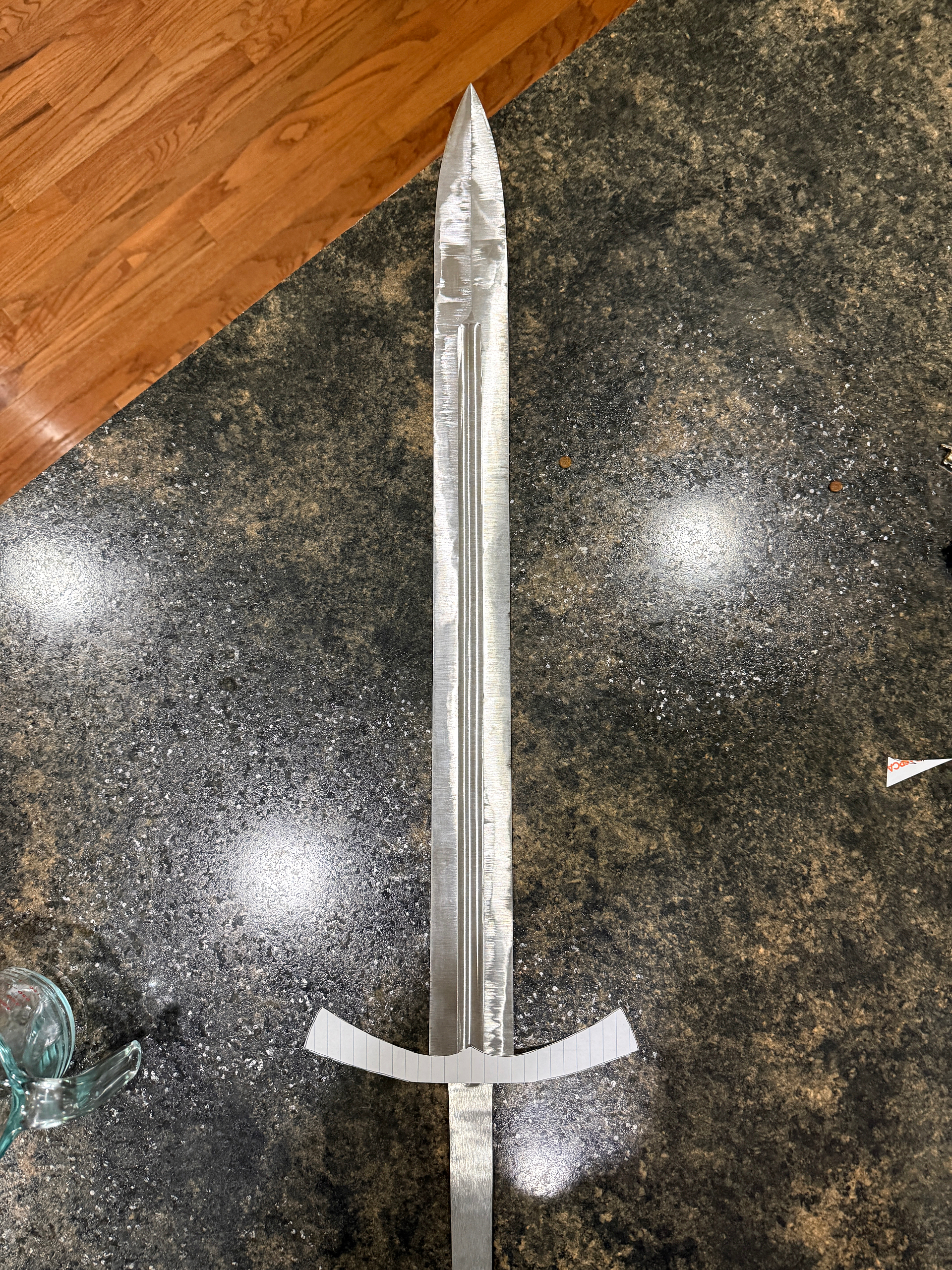
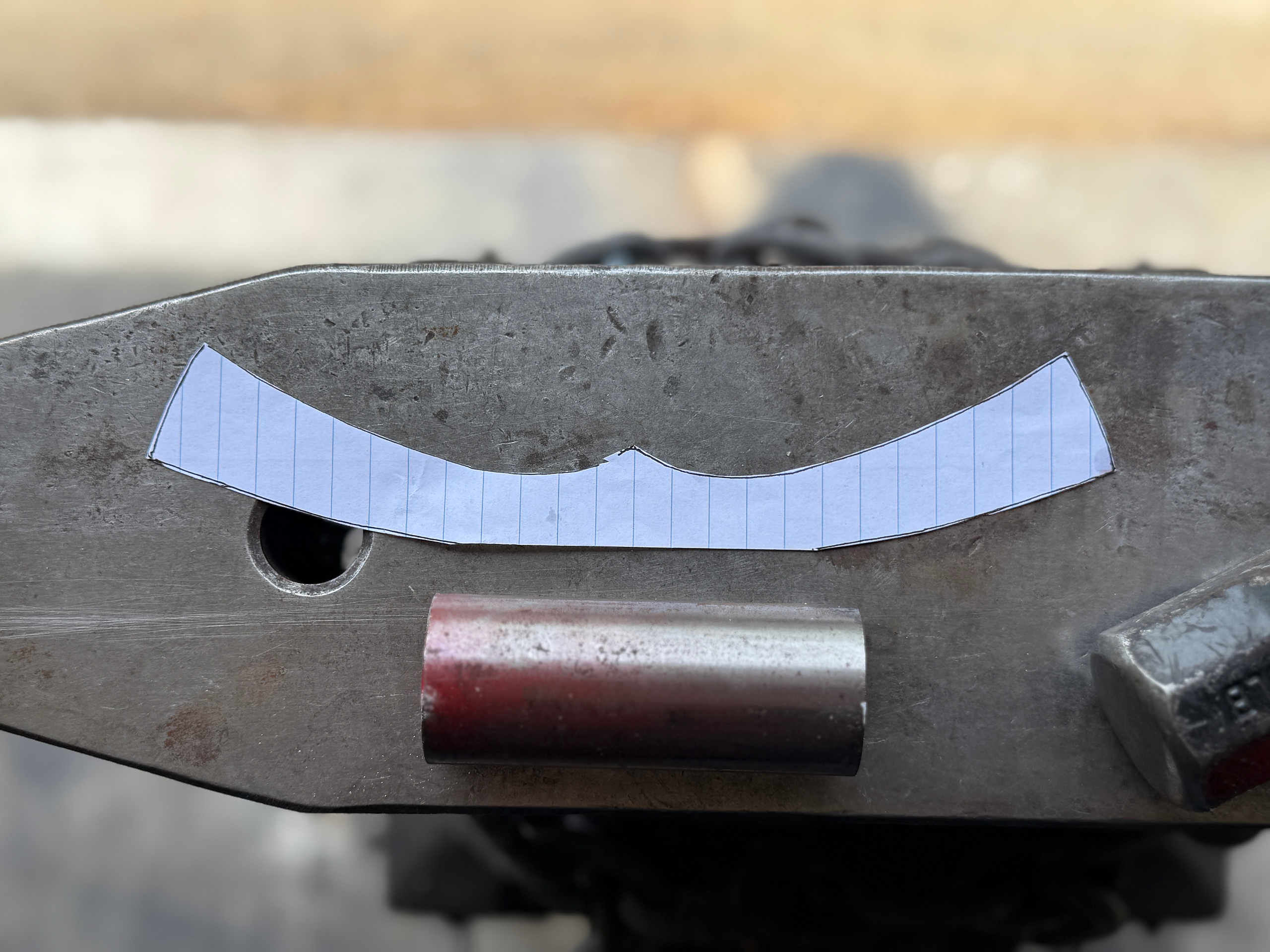
Next up is making a guard. I started out by simply drawing up something using pen and paper, cut it out and laid it out on the blade. Eyeball work. I’m not going for any historical accuracy in any sense with this sword so I can do anything I like.
Closest analog would be a medieval arming sword, but the blade is slightly shorter, and with less width taper. Another close guess would be an Oakeshott type X but it wont fit all the specs for that either. Its my sword and I’ll make it how I like 🙂
Now to making the guard, I cut off a 3.5″ long piece of 1.5″ diameter W1 drill rod. This turned out to be quite a bit more steel than I’d need, but this is my first sword and I wasnt entirely sure how much I’d need preferred to err on the side of caution. Better have too much than not enough
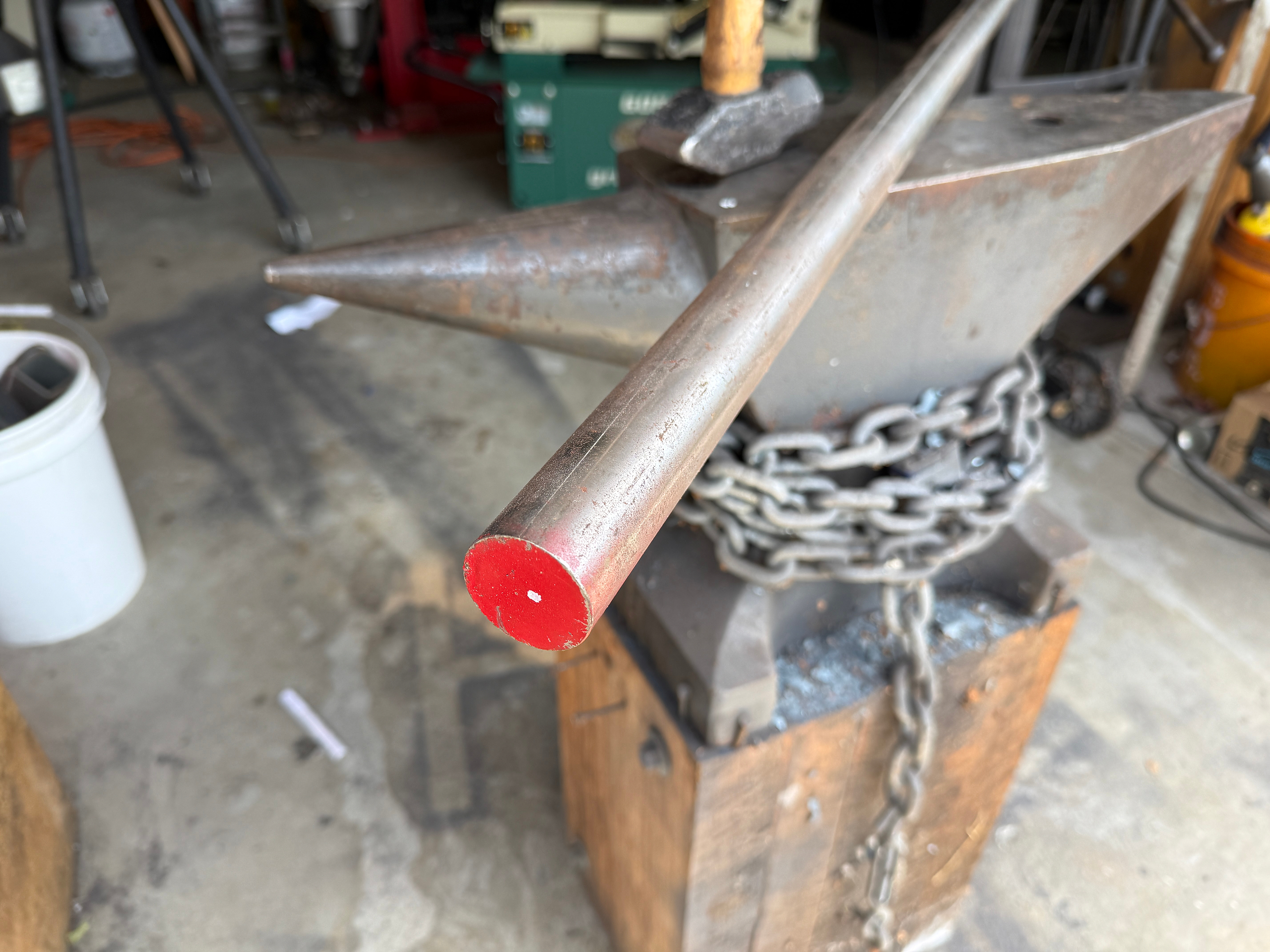
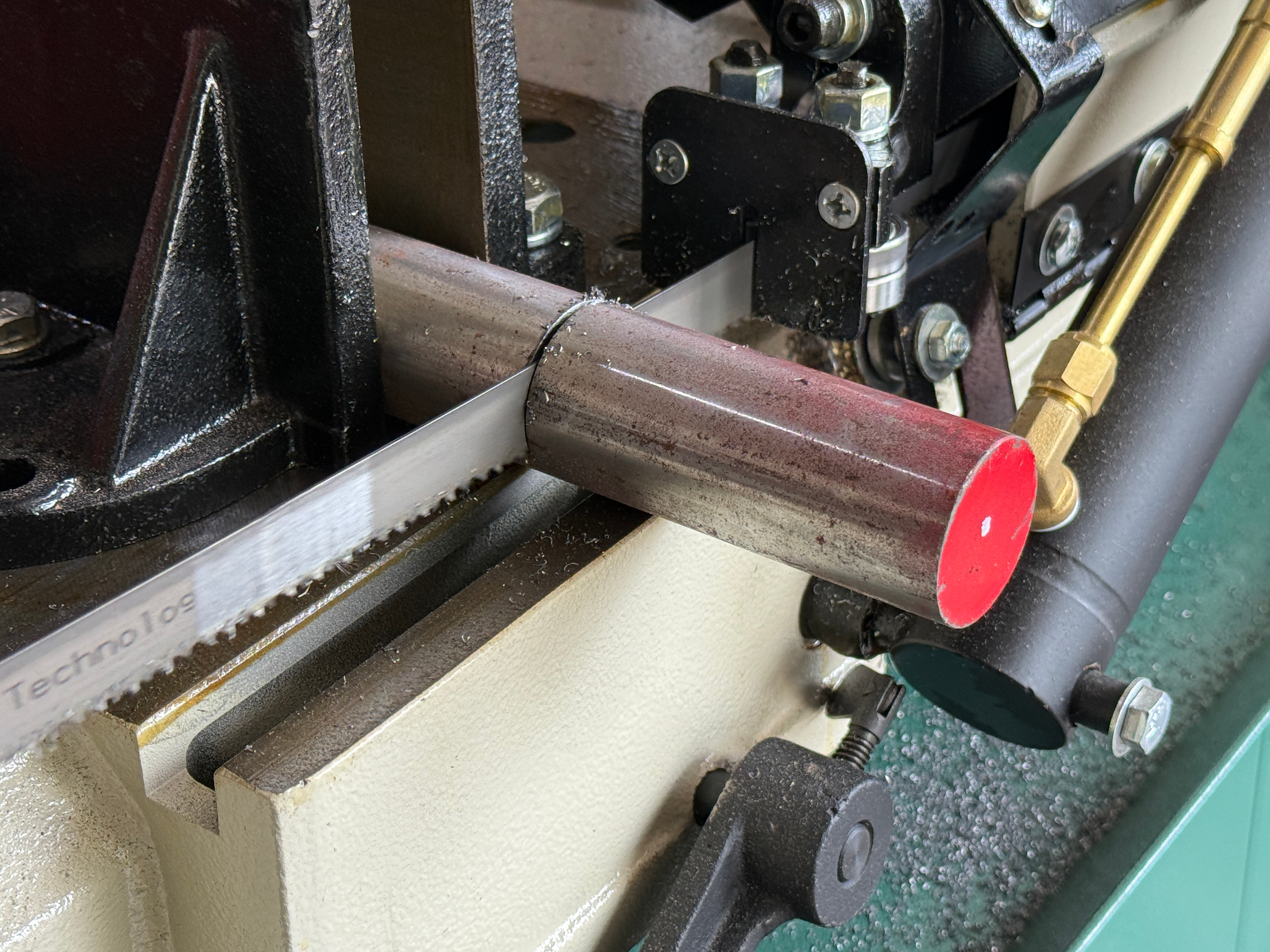
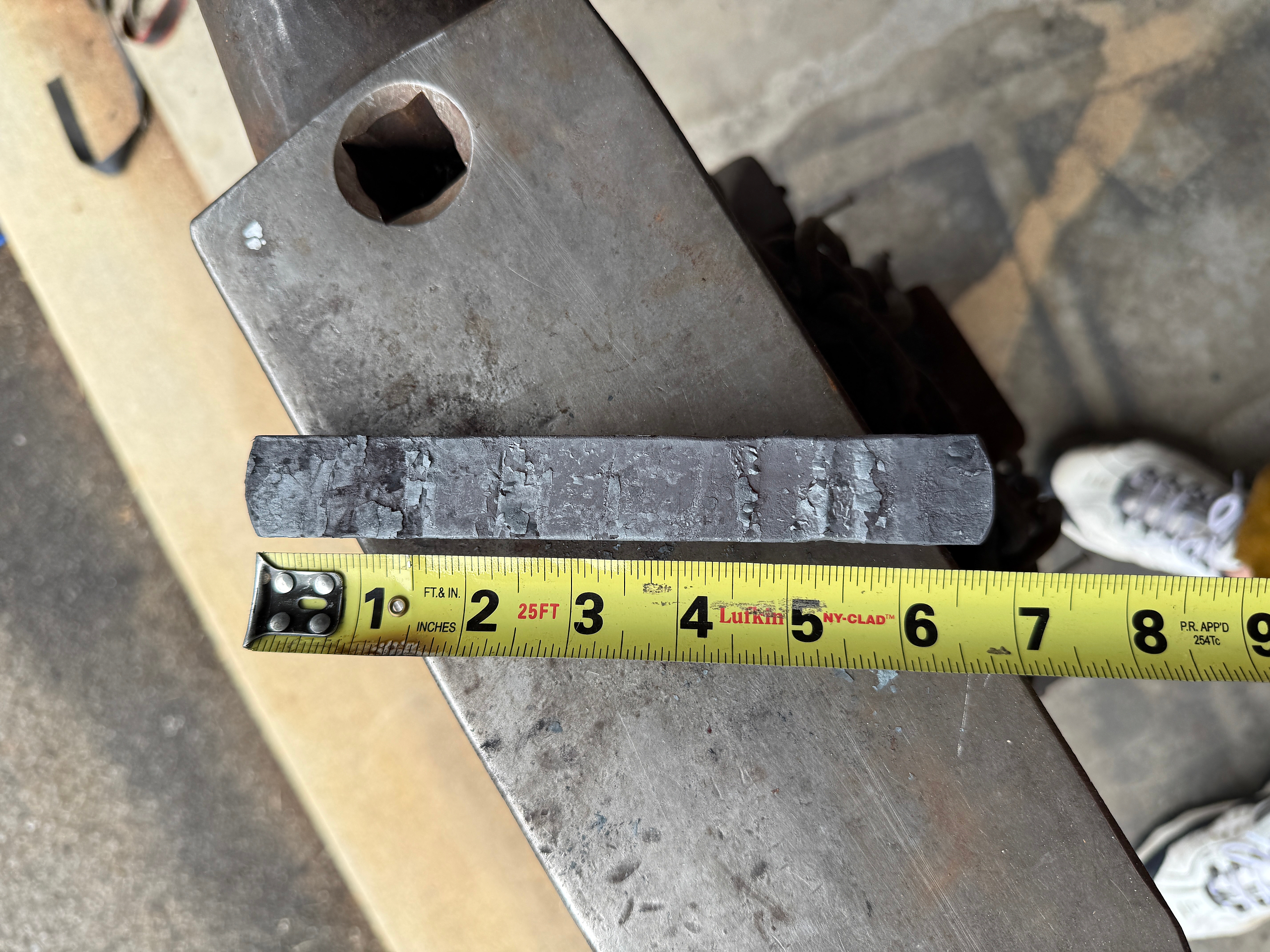
First I rough forged it into a square bar about 1″ x 1″. As you can see it already doubles in length
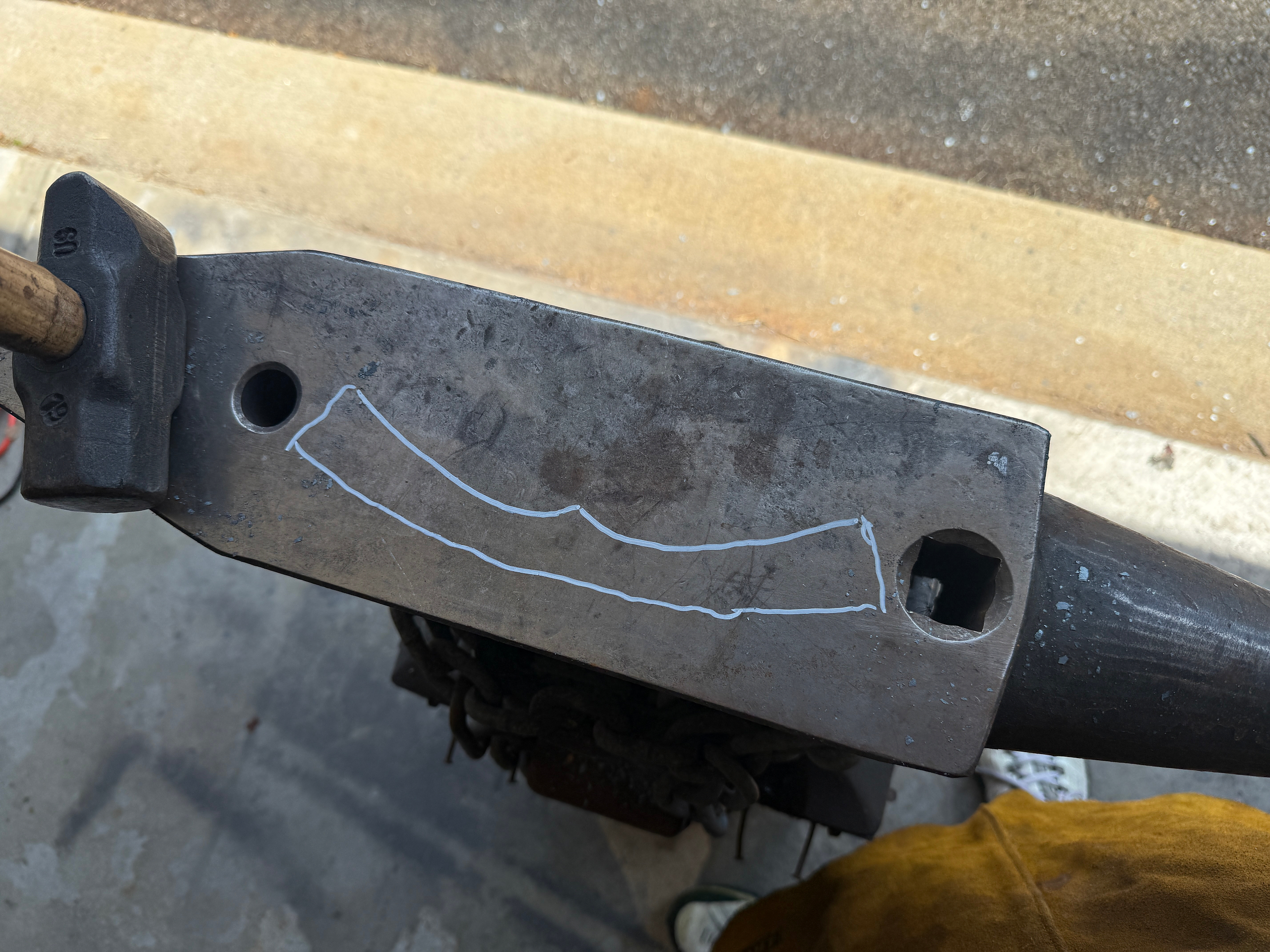
you cant set a 1900F. Piece of steel next to a piece of notebook paper to compare size and shape. the radiant heat would cause it to burst into flame instantly, so I drew it on the top of the anvil using a paint pen.
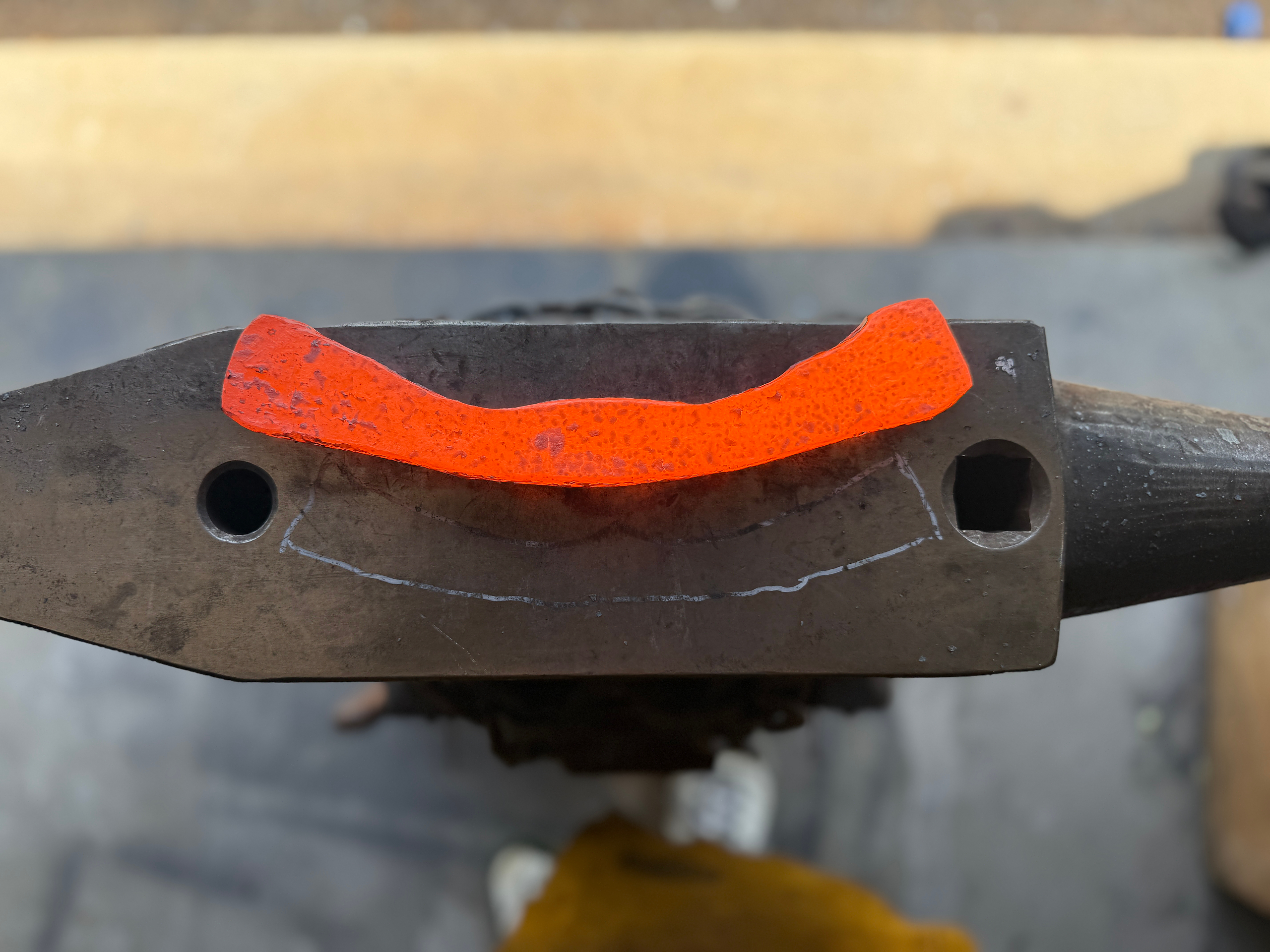
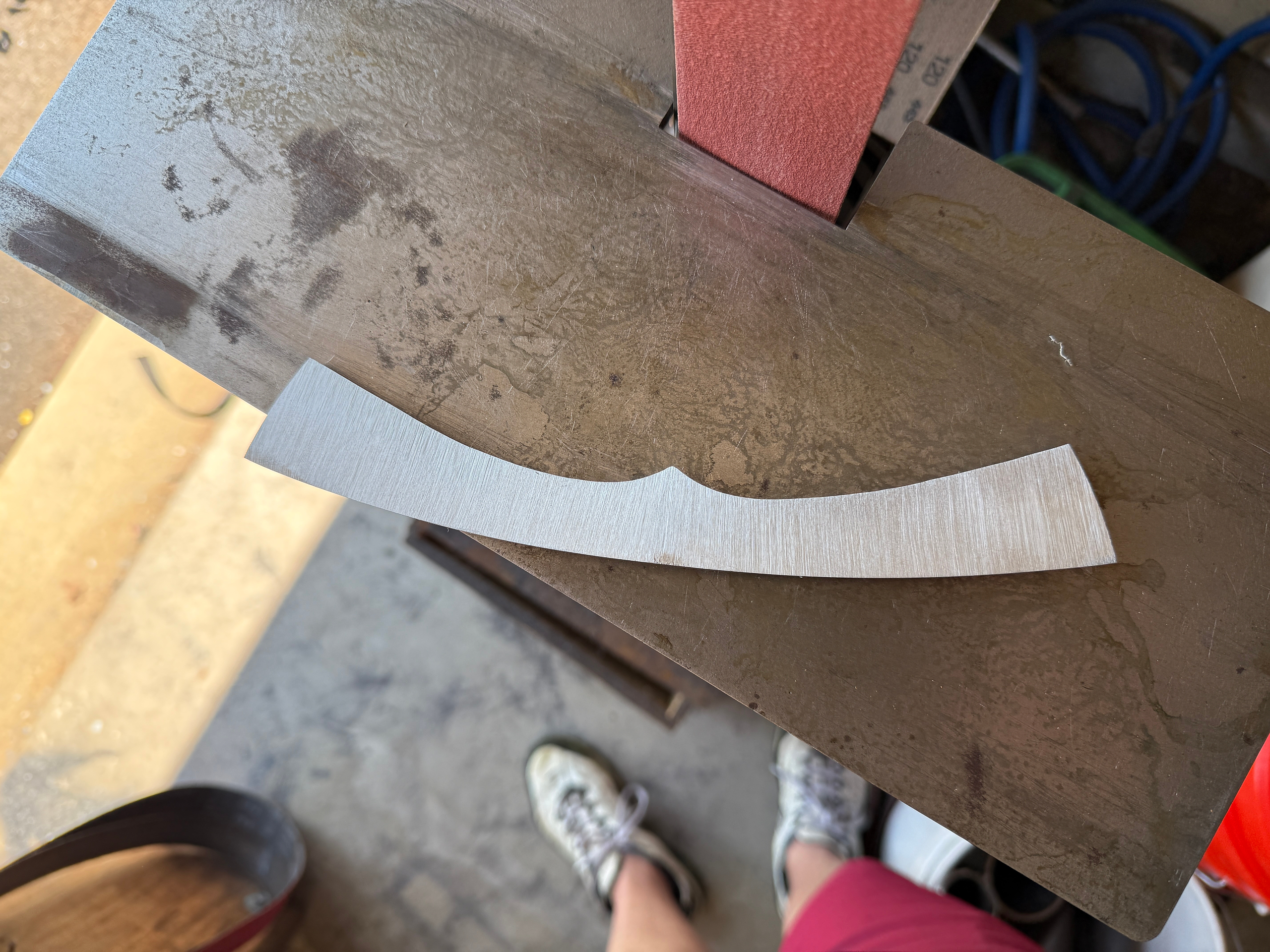
After forging the rest of the way out its a fairly close match. Close enough for a grinder to finish it. Clearly its a lot longer than intended. its also thicker
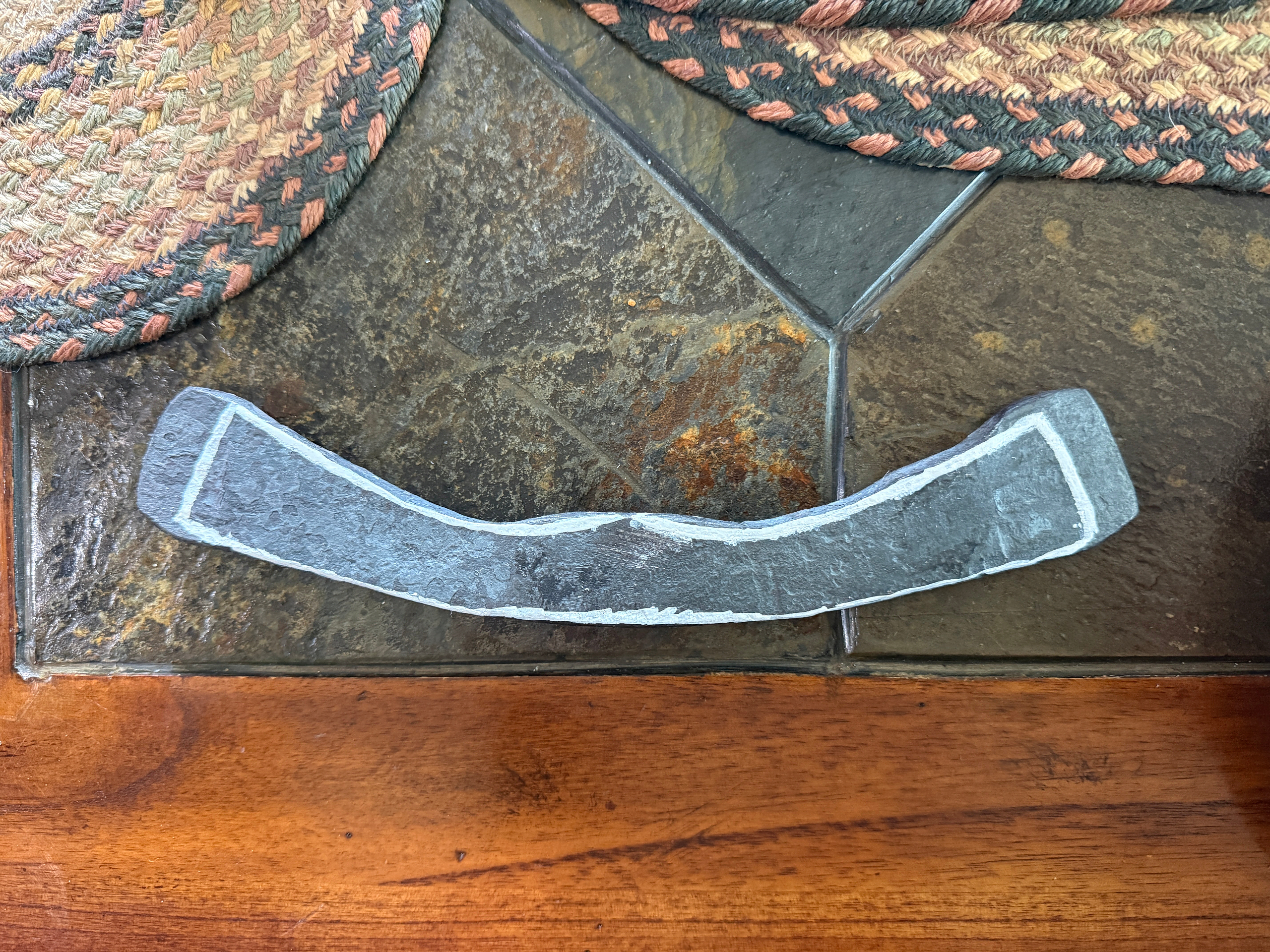
Once cool I again use the paint pen to draw the design on the guard
and start grinding
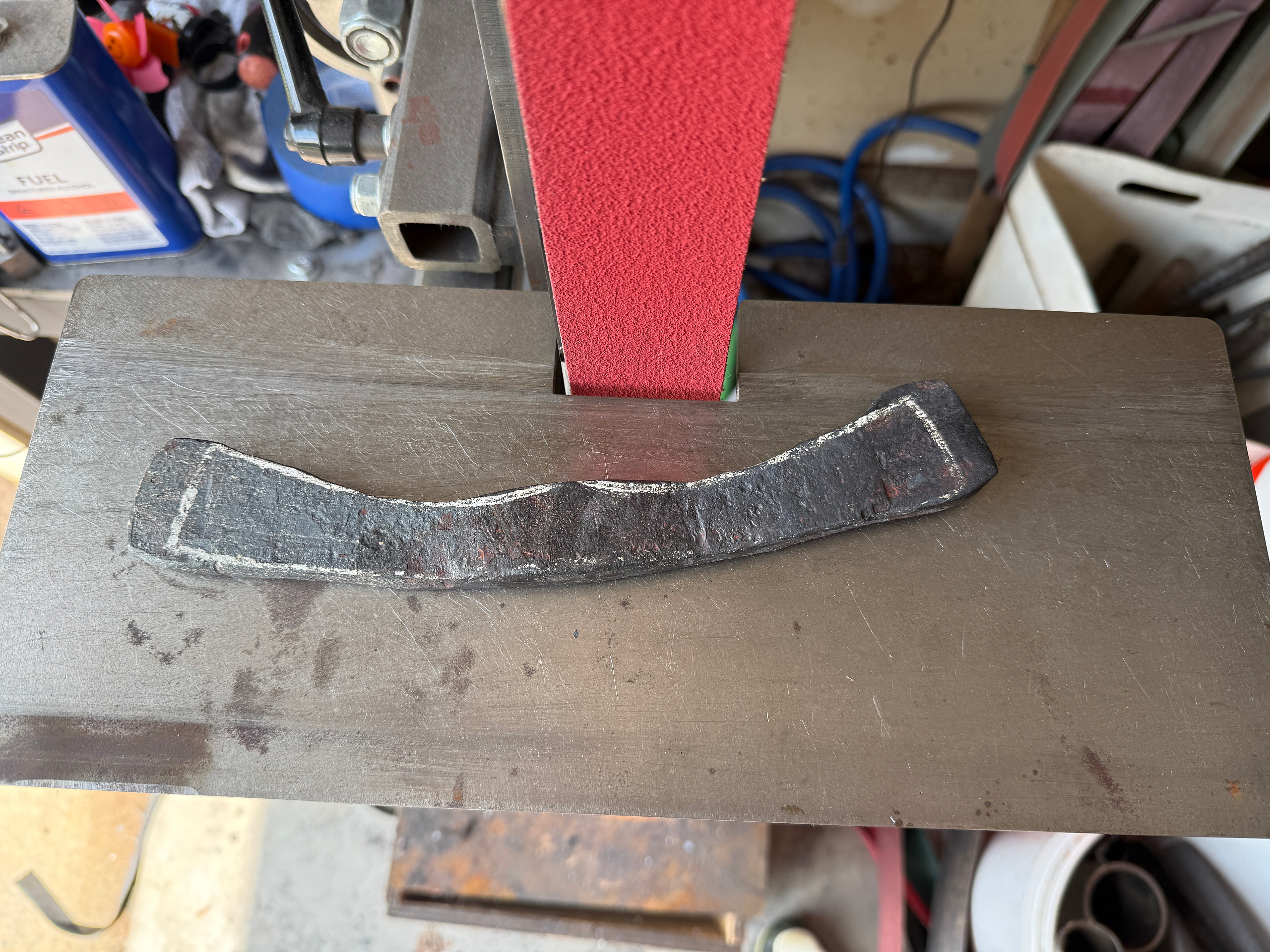
a couple dirty hours later…
Just sat the guard on the blade for a look. Next up is milling a slot through it for the tang